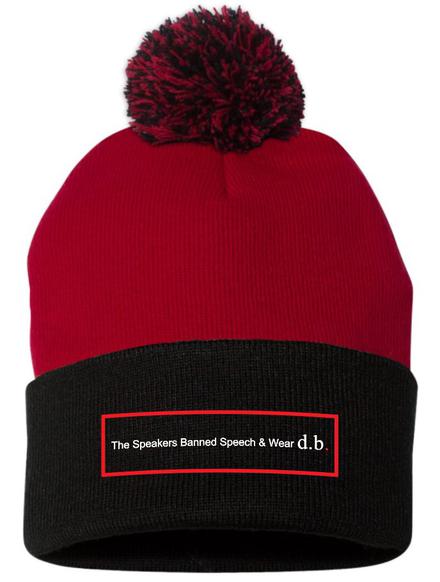
From Chicago to Edmonton, 2019–2021, the journey of The Speakers Banned Speech and Wear became its own story of resistance. What began as citizen fashion — banned inside the Alberta 30th Legislature — evolved into the LISTEN label, an artifact shaped in the spirit of Virgil Abloh’s Figures of Speech at the MCA Chicago, July, 2019.
The wear itself, gifted freely, travelled farther than any ban could reach. It entered the Alberta 31st Legislature and Edmonton City Hall through Hon Sarah Hoffman and Hon Angela Pitt, and many more polititians and activists in between, outdoor art show and tell, while crossing party lines and proving that art, when carried by citizens, finds its way back into the democratic spaces that once tried to silence it. Citizen art, once banned, now present.
XLife continues in that lineage — a living practice of art, fashion, free press, and public witness. It stands in memory of Dennis Edney, whose courage taught me that democracy is not observed from a distance. It is lived, defended, documented, and spoken aloud. His example pushed me beyond the creativity that comes from within and into the responsibility of free press: the duty to see, to record, and to refuse silence. #ArtisFreedom
XLife stands at that intersection: art, fashion, free press, and the ongoing work of protecting expression in a Canadian democracy. Front Page

Left Stage, Exit Right
Free from Artifice. XLife!
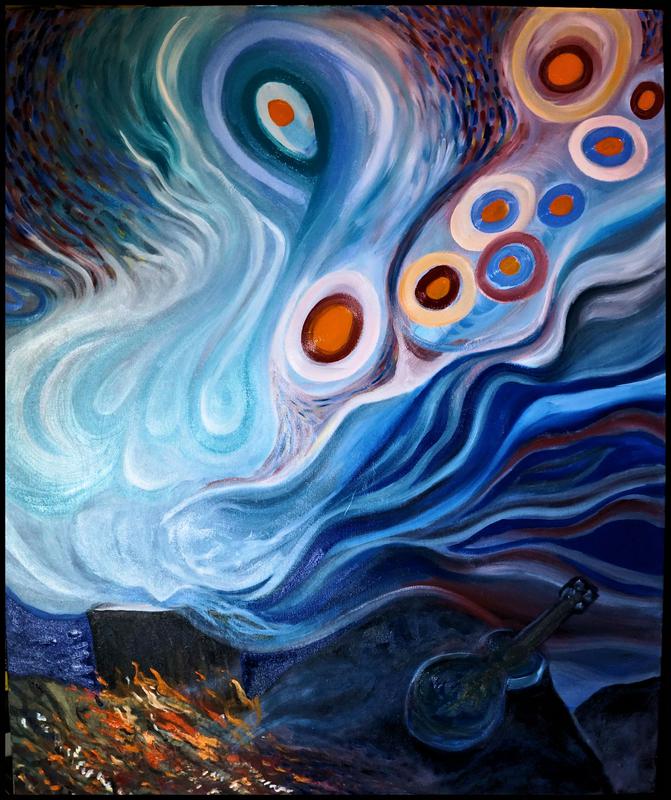
Nine Afghan Boys Gathering Firewood — Oils, Acrylic (2000–2001, 2013, 2015, 2025)
Nine Afghan Boys Gathering Firewood is one of my multi‑year social‑art works, created across four periods. It began in 2000–2001 as a painting of Bruce Cockburn playing a uke beside Alberta’s Lake Louise. In 2013, during a protest outside the gates of the Edmonton Folk Festival, the uke was replaced with a rocket launcher, shifting the work into a direct response to war and civilian suffering. The painting was revisited again in 2015, transforming fully into an abstract. In 2025, outside the same festival grounds, I completed the work by painting the backside of the canvas, titled The Roots of War and Retribution. The piece is created in memory of the nine Afghan boys killed on March 1, 2011, when a U.S. military helicopter mistakenly targeted children gathering firewood. This tragedy is well‑documented and remains one of the most painful civilian‑casualty incidents of the Afghanistan War. The painting is rooted in the global aftermath of September 11, 2001, the U.S.‑led war that followed, and Canada’s involvement in that conflict. It also carries the emotional force of Bruce Cockburn’s protest song If I Had a Rocket Launcher, written in response to violence against civilians. Cockburn — a Juno Award winner and member of the Order of Canada — continues to write and perform; he currently lives in the United States with his family. Across its 25‑year evolution, Nine Afghan Boys Gathering Firewood gathers themes of war, innocence, retribution, and witness. It stands as a tribute to the boys and a reminder of the human cost carried by nations, civilians, and soldiers alike.
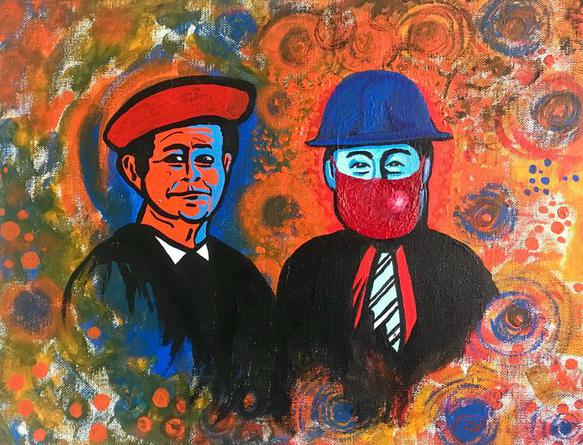
The Grande Stage Democracy Art Series: This painting asks viewers to question the boundaries placed around artistic expression and citizen‑driven free press in Canada. It reflects on why creative and journalistic voices sometimes face restriction within a democratic society. The composition places two well‑known figures within parallel storms—each confronting a distinct moment of political and social upheaval—inviting the viewer to consider how eras of turbulence influence leadership and art. On the left, George W. Bush stands as the painter‑president, surrounded by the melting steel and fires of war that followed the September 11, 2001 attacks on the United States. His storm is one of geopolitical shockwaves, military decisions, and the long shadow cast across global politics. On the right, Jason Kenney faces a different kind of crisis: a world gripped by a global pandemic and the cascading collapse of oil prices in Alberta and abroad. His storm is viral, economic, and deeply local—an upheaval that reshaped the province’s political and social landscape. Together, the two figures form a study in leadership under pressure, painted into a single unsettled sky. The terror attacks of 2001 and the pandemic nineteen years later become twin markers of instability—two moments when the world shifted, and when Alberta felt the shock through falling oil prices, political strain, and public uncertainty. This work stands as both a parallel and a provocation: How do leaders navigate storms they cannot control? And why, in a democracy, is the citizen artist still told where they may or may not stand? XLife, On Guard for Thee.
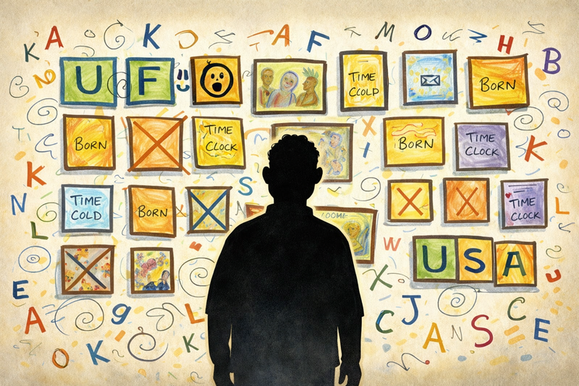
"Life is too short doing what others say I can do, when I already know in my heart what I can do" Artist Statement — Spending the day inside John Will’s Born in the UFO exhibition on the 3rd floor of the Art Gallery of Alberta, I found myself responding in the only way that feels honest: through doodle‑notes, fragments, and the restless alphabet that keeps showing up in my sketchbook. Birds of a Feather — the social‑art project I’m building in Book Three — is rooted in the same terrain Will may have walked. Faith, democracy, nature, and the strange signals that flicker between them. My sketches often featured the alphabet, A to Z, scattered or boxed or crossed out. For me, the alphabet is the visual shape of distraction — the monkey brain, the static, the noise that fills the mind before meaning arrives. It’s also a nod to William S. Burroughs’ idea that language is a virus: something that infects, replicates, mutates, and spreads through culture. In my doodles, the alphabet becomes both the symptom and the cure — the viral code and the antidote.
Working inside Will’s exhibition, I felt how his humour, his irreverence, and his UFO‑logic open a space where the ordinary becomes strange and the strange becomes ordinary. My sketchbook responded in kind to John Will's exhibition warning "Some Truth, More Lies, All Legend" followed with arrows, spirals, exits, and stages — a kind of internal theatre mapping how ideas move through me. These doodles are not illustrations; they’re field notes. They’re how I track the collisions between the world around me and the world inside me. Birds of a Feather continues in that spirit. It’s a manifesto built from moments — overheard conversations, public rituals, faith symbols, democratic tensions, and the natural world that frames it all. The doodles I made today are part of that ongoing record: a way of catching the viral language after it overtook me, and turning it into something playful, reflective, and alive. This is social art in motion — a practice of transforming the distractions into truthful meaning.